
The diplomatic and commercial relations between the Republic of Ghana and the Republic of Belarus have officially entered a decisive, economy-first era.
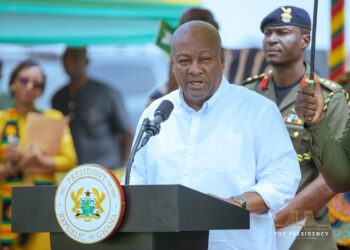
Speaking at the opening session of the high-profile Ghana-Belarus Business Forum in Minsk, the Chief Executive Officer of the Ghana Investment Promotion Centre (GIPC), Mr. Simon Madjie, declared that while formal bilateral relations between Accra and Minsk have stood strong since 1982, the current global economic landscape requires a profound structural shift.
The focus must transition from traditional diplomatic pleasantries toward deep private-sector integration designed to catalyze industrial growth and achieve economic liberation for both nations.
“We come to you today because we see a unique opportunity to create a synergy that will make our two countries and our people prosper. We do realise that at some point, growth will have to happen. And growth can only happen when private sector players come together”
Mr. Simon Madjie, GIPC CEO
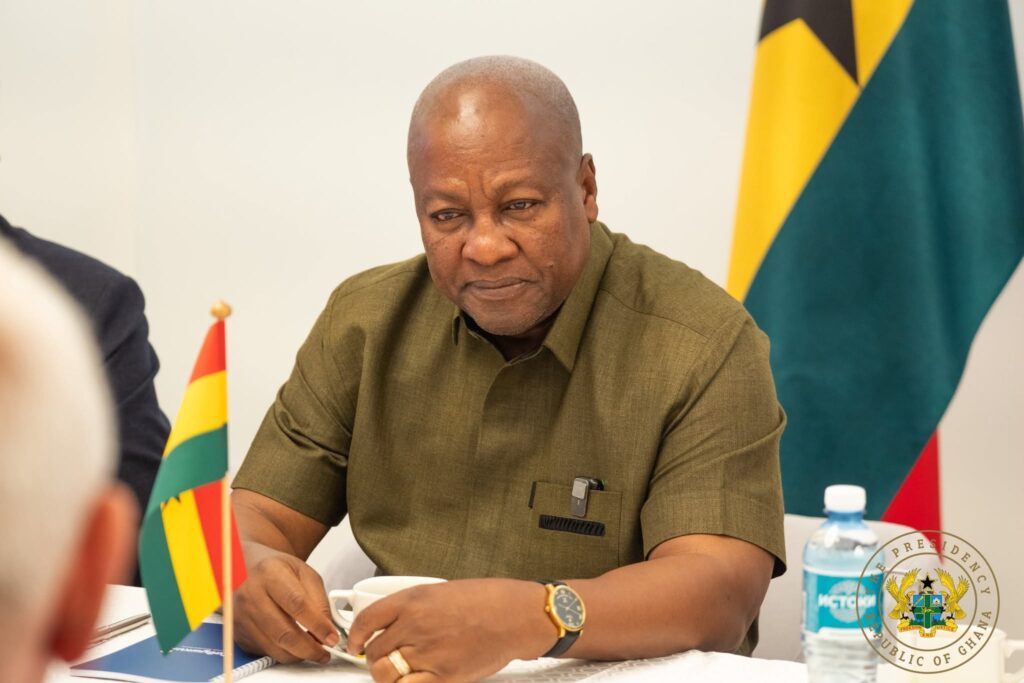
The business forum, convened alongside the official state visit of His Excellency President John Dramani Mahama, serves as a strategic marketplace for policy alignment and institutional match-making.
Addressing an audience of European capital allocators, heavy machinery manufacturing executives, and West African trade delegates, Mr. Madjie emphasized that Ghana is not approaching Eastern Europe as a passive trade market, but as an active, equal partner seeking long-term commercial alliances.
The approach defined by the GIPC leadership seeks to move past simple raw extraction toward highly sophisticated domestic processing and value addition, as Ghana is actively seeking technical partnerships across a wide array of high-growth, modern sectors.
These target areas include “heavy agribusiness machinery, advanced agro-processing systems, artificial intelligence, and the broader digital economy.”
Matching Belarus’s deep engineering and manufacturing capabilities with Ghana’s vibrant economic space, both nations aim to construct value-added processing plants that eliminate raw crop waste and produce finished consumer goods for regional export.
The collaborative spirit of the forum extended directly to practical, industrial convergence, with Ghana leveraging its natural resource wealth to court specialized technical services, equipment manufacturing partnerships, and advanced engineering inputs from industrialized nations.
Rather than allowing resources to leave the continent in their raw state, this strategy establishes a clear roadmap for localized manufacturing hubs that process domestic raw inputs, replace expensive imports, and generate stable, skilled industrial jobs.
Macroeconomic Stabilization
The case for choosing Ghana as a primary investment destination was further reinforced by the country’s commanding position within the global commodities market and its stabilized macroeconomic indicators.
The GIPC brief highlighted that Ghana’s fiscal stabilization programs have successfully managed inflation, expanded national fiscal reserves, and restored high levels of investor confidence across the domestic private sector, as incoming corporate capital is insulated from volatile currency fluctuations or arbitrary regulatory interventions.
Mr. Madjie reminded international investors of Ghana’s industrial leadership within the global mining and mineral processing ecosystem, noting that the country stands as the absolute number one gold processing power on the African continent and ranks number six globally.
The country is actively leveraging this mining dominance to court specialized technical services, equipment manufacturing partnerships, and advanced engineering inputs from industrialized nations like Belarus, looking to build mutual prosperity and shared growth under the current administration.

The most significant policy revelation delivered during the GIPC Chief Executive’s address centered on the aggressive regulatory reforms sweeping through Ghana’s statutory investment architecture.
Under the direct vision of President Mahama, Ghana has systematically dismantled the restrictive compliance frameworks, complex licensing pathways, and heavy entry-capital thresholds that have frequently hindered foreign direct investment, establishing an open, frictionless commercial environment.
In a direct pitch to Belarusian financiers and industrial operators, Mr. Madjie announced a comprehensive rewrite of the nation’s foundational investment law, highlighting the complete abolition of the historical minimum capital requirement for foreign entities looking to set up operations within the country.
This regulatory rollback drastically lowers the barrier to entry, allowing foreign innovators, tech firms, and small-to-medium industrial enterprises to incorporate, deploy capital, and launch commercial operations in Ghana without artificial financial restrictions or burdensome compliance costs.
“So for those of you seeking to invest in Ghana right now, you don’t need to come up with a minimum capital requirement. All that has been scrapped. It’s much easier for you to come into our country to do business. But all of this cannot happen if we do not connect. And that’s the essence of our meeting today”
Mr. Simon Madjie, GIPC CEO
While the immediate domestic market of Ghana provides a highly stable consumer base of 35 million people, the GIPC’s broader pitch positioned the country as the definitive, de-risked gateway to the entire African continent.
With the African Continental Free Trade Area secretariat headquartered in Accra, factories operating within Ghanaian borders enjoy duty-free and quota-free access to a massive regional market.
The domestic market of 35 million people expands directly into the Economic Community of West African States, which boasts a regional population of 425 million consumers, before opening up entirely into the continent-wide trade market of 1.4 billion individuals. The long-term economic projections presented by the GIPC underscore an extraordinary commercial upside for early-stage investors.
While the combined African Gross Domestic Product currently stands at an impressive 3.4 trillion dollars, the underlying commercial spending metrics are growing at an extraordinary rate. By the year 2050, the combined business and consumer spending component across the continent is projected to skyrocket to a staggering 16 trillion dollars.
This structural growth trajectory makes the continent the fastest-expanding consumer market on earth, with Ghana sitting at its geographic and administrative center, and Mr. Madjie established targeted investment pathways across several high-growth, modern sectors.
READ ALSO: Fidelity Bank Executive Exposes Ghana’s Credit Gap