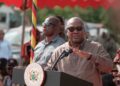
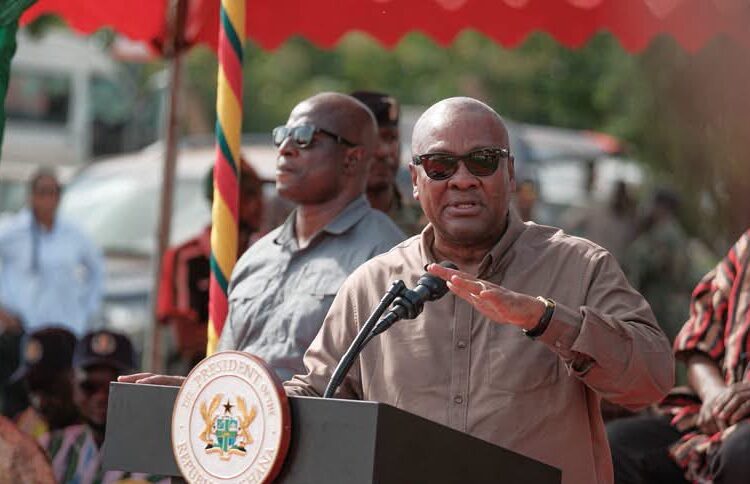
President John Dramani Mahama has commissioned an expanded milk production line at the Tema factory of Nestlé Ghana Limited, presenting the plant as proof that Ghana can produce what its people consume. He performed the ceremony today in the Tema Industrial Area, where the new line can turn out nearly 30,000 tons a year.
President Mahama linked the investment to the 24-hour economy initiative and credited Nestlé for staying in Ghana through hard times. He disclosed that the factory supports about 1,200 full-time workers and about 1,300 third-party workers, and that 94.4% of Nestlé’s employees are Ghanaian.
“Every ribbon that has been cut in this city answers the same question: Can Ghana make what Ghana consumes? This morning at the Tema factory of Nestlé Ghana Limited, the answer is an emphatic yes.”
President John Dramani Mahama
President Mahama opened by placing the ceremony in the history of Tema, the city where Dr. Kwame Nkrumah “planted the industrial ambitions of a young republic.” He stated that Tema still remains the place where that ambition is most visibly at work.
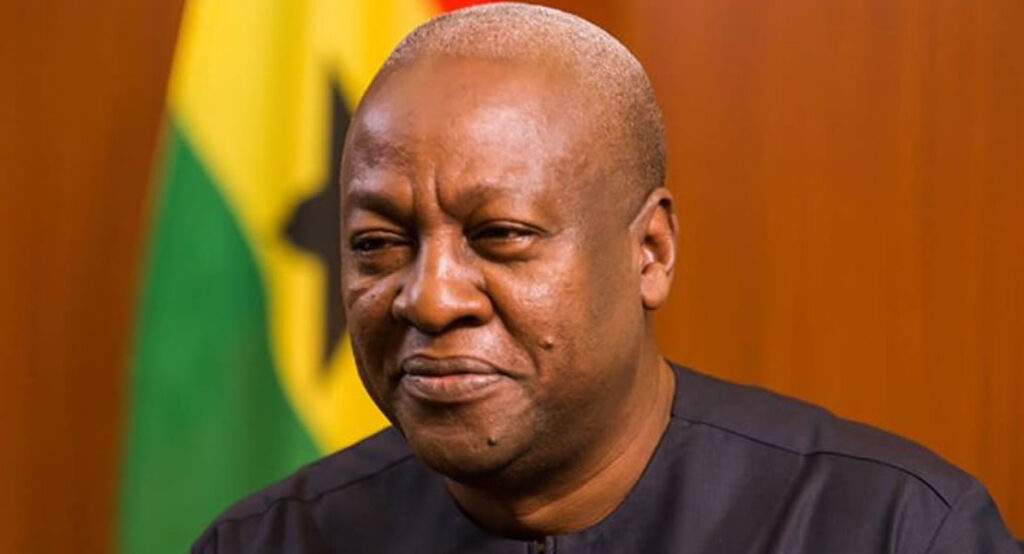
The President recently marked Founders’ Day with a call for unity to realise Nkrumah’s vision, and he used the Nestlé event to show that vision taking shape on the factory floor.
Seven Decades of Staying Power
Nestlé’s Ghanaian story began in 1957, the first year of independence, President Mahama recalled. In 1971, the Tema factory was inaugurated and brought the manufacture of household brands and staples to Ghanaian soil.
For nearly seven decades, he noted, the company has shared the country’s progress and endured its setbacks, through happy times and sad ones. “Nestlé has never once given up on Ghana.”
Many industries shut down and left when conditions turned hard, the President observed. He congratulated Nestlé for staying, and he held up that record as the reason the company’s expansion carries weight.
President Mahama turned to the products Ghanaians know best. Milo, Cerelac, Nescafé and Carnation are all household names, he stated, but Ideal Milk holds a special place. He described it as “a product especially well-loved by Ghanaians.”
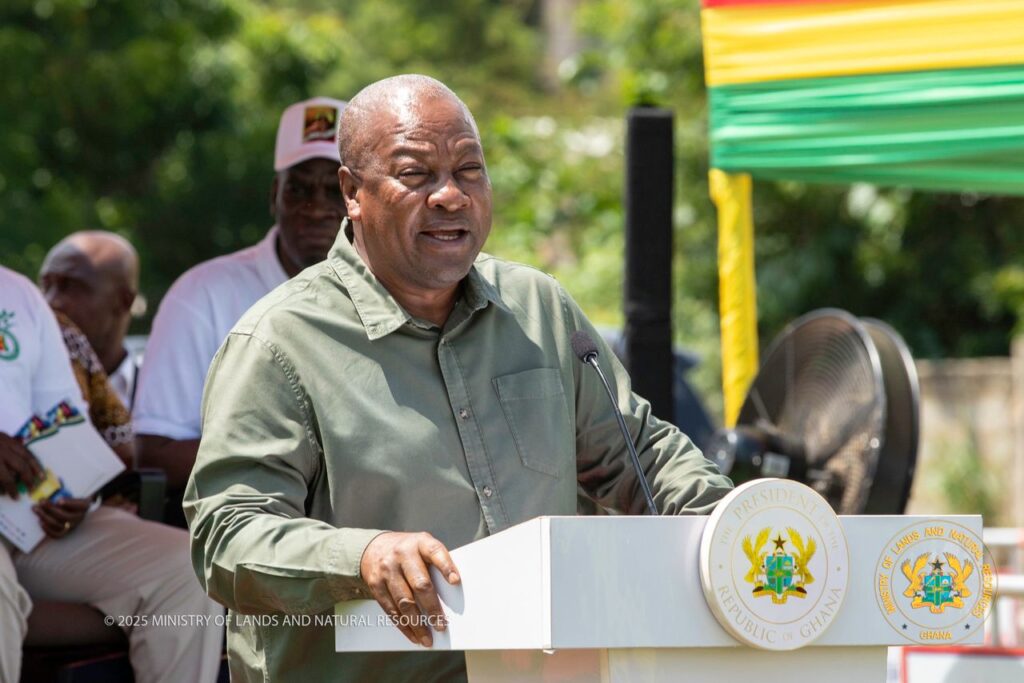
He listed its uses with evident fondness: “Ideal milk has gone into tea, it has gone into cocoa, it has gone into rice water, and even gari soakings.” He also recalled a childhood habit, sneaking back to the fridge after breakfast for a drink. The tins were so precious, he added, that parents pressed them to save every drop.
A Bigger Line Built on Ghanaian Soil
The commissioning replaces old equipment with new capacity. President Mahama explained that the investment “retires a production line that served this factory faithfully for more than 30 years and it has reached the limits of its capacity.” The old line produced 12,960 tons a year, almost 13,000 tons. Its replacement can produce nearly 30,000 tons.
For President Mahama, where the work happens matters as much as how much. The milk is filled, homogenized, sterilized and packed “on Ghanaian soil by Ghanaian hands.” That detail, he suggested, is the practical answer to the question he posed at the start of his address.
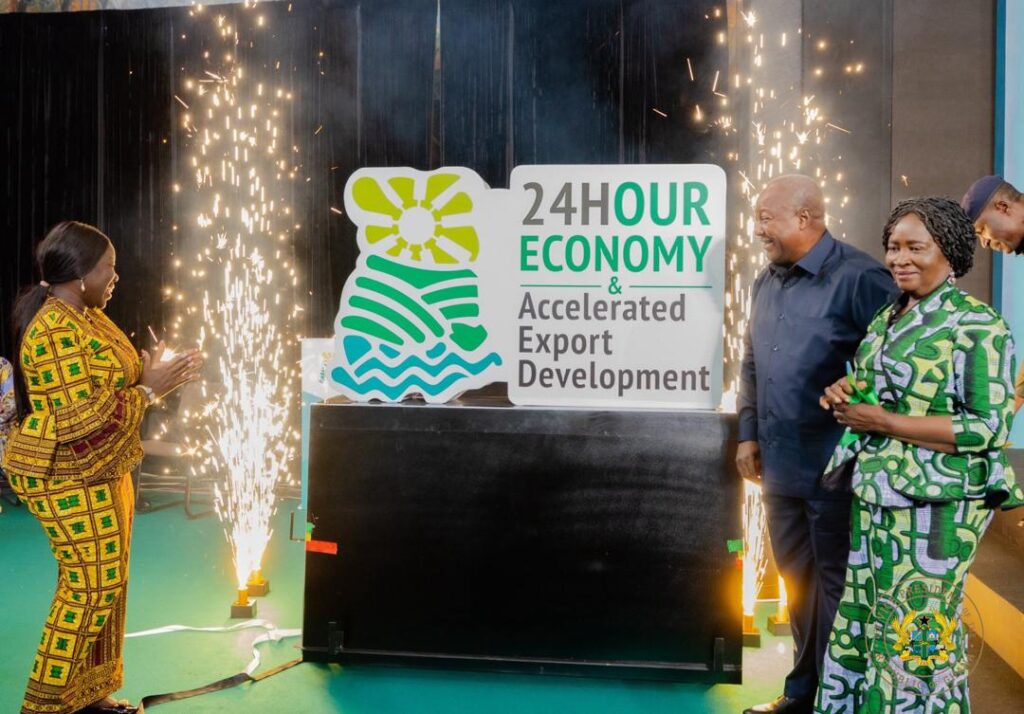
President Mahama tied the factory directly to his flagship economic programme. He insisted that the plant shows what the initiative means in practice: “When we talk about 24-hour economy initiative, this is what we are talking about. A factory that never sleeps. It works 24-7.”
He described the investment as sitting at the heart of the initiative. The factory fits the wider push set out in the government’s 24H+ programme booklet. The government has said the programme aims to make Ghana an industrial powerhouse by 2035, and it has already drawn significant investment commitments from the private sector.
Ghanaian Workers Power the Line
The workforce figures give the President’s confidence a human face. Roughly 1,200 full-time workers and about 1,300 third-party workers keep the plant running, and President Mahama announced with evident pride that 94.4% of Nestlé’s employees are Ghanaian. In his telling, the people behind the line matter as much as the machinery.
President Mahama closed his remarks by turning to what he called the more interesting part of the day. He told guests that the inspection of the new production line would follow.
READ ALSO: Italy Approves Meloni’s Electoral Reform