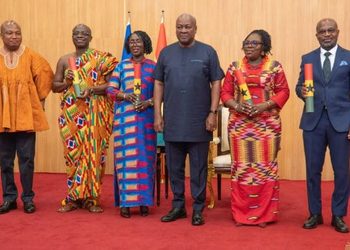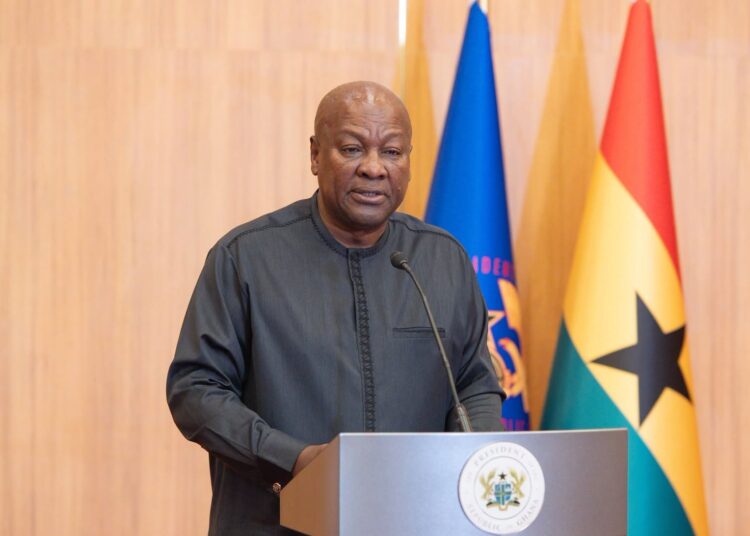
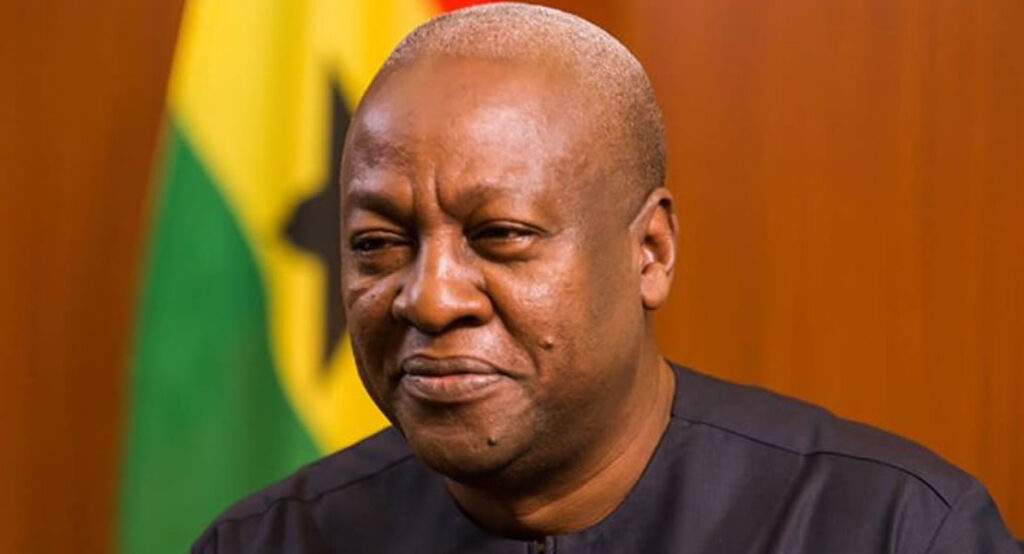
President John Dramani Mahama has directed Ghana’s newly commissioned ambassadors to explain the country’s bid to partner with the BRICS countries as a drive to broaden its development ties. He gave the instruction at the commissioning of four envoys at the Presidency, Jubilee House, on Friday, October 16, 2026.
The bid follows Cabinet approval, which Foreign Affairs Minister Samuel Okudzeto Ablakwa announced in Accra on October 6, 2026, while India’s External Affairs Minister, Dr Subrahmanyam Jaishankar, was on an official visit.
President Mahama told the envoys that the aim is wider trade, investment, industrialisation and value addition without abandoning Ghana’s traditional partners.
“Ghana’s decision to apply for partnership with the BRICS countries reflects our determination to broaden our development partnerships and deepen South-South cooperation.”
President John Dramani Mahama
Envoys Become Messengers for the Bid
President Mahama gave the ambassadors a communication task alongside their diplomatic one. He asked them to “explain this approach clearly” to the governments and institutions they will deal with.
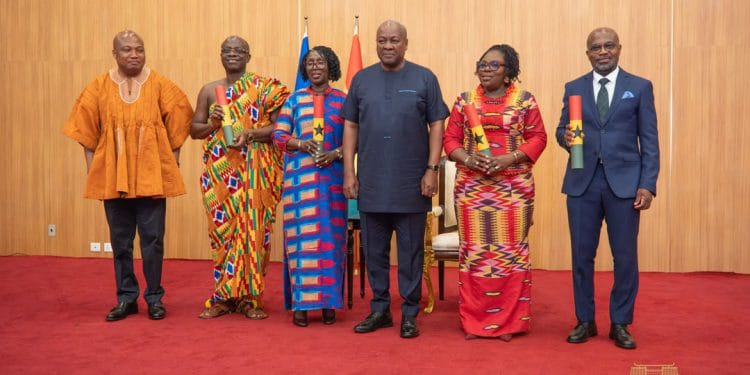
The four will serve in Angola, Qatar and Israel, and at the United Nations Office and other international organisations in Geneva. Hon. Ablakwa attended the ceremony.
The President also asked the envoys to promote and protect Ghana’s interests, uphold international law and contribute to a just and equitable international order through peaceful cooperation. He told them to let Article 40 of the Constitution guide their conduct.
Hon Ablakwa disclosed on October 6 that Cabinet had approved the move and that Ghana will formally apply. He stressed that the application is a request to join rather than a membership, and he revealed that Accra has already asked India for help with the process.
The Vaultz News reported then that Cabinet approved the bid, and a later report examined how the partner country bid targets alternative financing.
Options, Not an Exit From Old Partners
The Foreign Affairs Minister framed the application as insurance against dependence on a few partners. “BRICS offers us that opportunity to have options in the development agenda. We want to have options,” he stated.
He then drew a clear boundary around the plan. He named India, Brazil and China among Ghana’s historical partners and insisted that the relationships stay: “We are not going to walk away from our traditional partners who value that relationship. But we must have new friends.”
President Mahama echoed the point in his own remarks when he said Ghana will sustain its long-standing relationships and working relations with its traditional partners while it widens the circle.

Hon Ablakwa tied the decision to what the government calls the new economy, a shift from stabilisation to industrial growth that he argued needs a wider circle of partners.
He disclosed that Cabinet has approved seven pillars under that agenda. “We don’t want to remain at just stability. We want sustainable economic growth, which creates jobs, which industrializes our country,” he stated.
He also called for resource sovereignty, in which Ghana is treated as an equal partner and stops exporting raw materials. The goal is to add value to natural resources with partners who share history and commitments. President Mahama made a similar argument at the United Nations last month, when he stated that Africa will process its minerals at home.
India Anchors the Application
Hon Ablakwa described India as the anchor of the bid. Trade between the two countries has more than doubled, he disclosed, from about three billion dollars in 2024 to roughly seven billion now. India’s membership of the bloc makes it the natural sponsor.
Ghana can also count on relationships with the founding members and with newer entrants, including the United Arab Emirates, Saudi Arabia and Iran, he added. All three have missions in Accra. He noted that the bloc had just held a summit in New Delhi, which he called very successful.
Analysts have urged caution on the plan. One recently called for expert consultation on the proposed partnership, and the envoys now carry the job of presenting it abroad.
President Mahama closed by tying them to results. Their key performance indicators, he stated, provide a framework for accountability, and he urged them to set clear priorities for their missions and to show progress. He wished them the support of government and prayed that God would guide them in their duties.
READ ALSO: IMF Backs Ghana’s Economic Buffers Against Global Commodity Turmoil