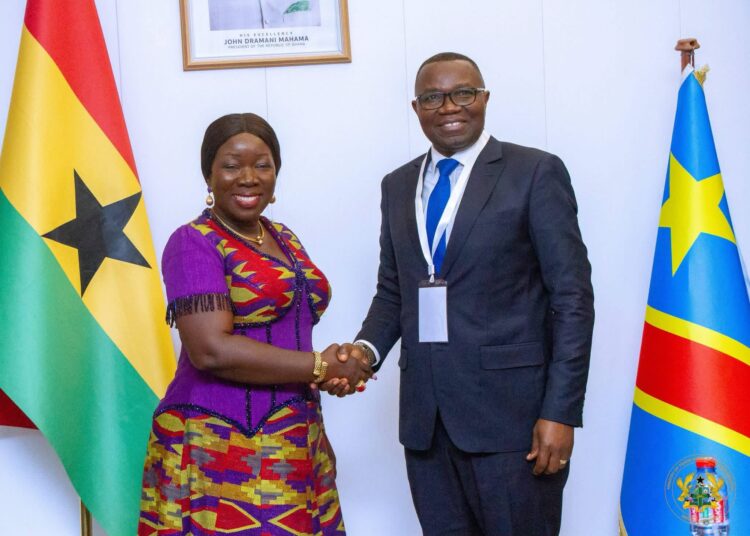
Ghana and the Democratic Republic of Congo (DRC) are seeking to strengthen bilateral trade, attract investment and deepen industrial cooperation as both countries explore opportunities to expand economic relations under the African Continental Free Trade Area (AfCFTA).
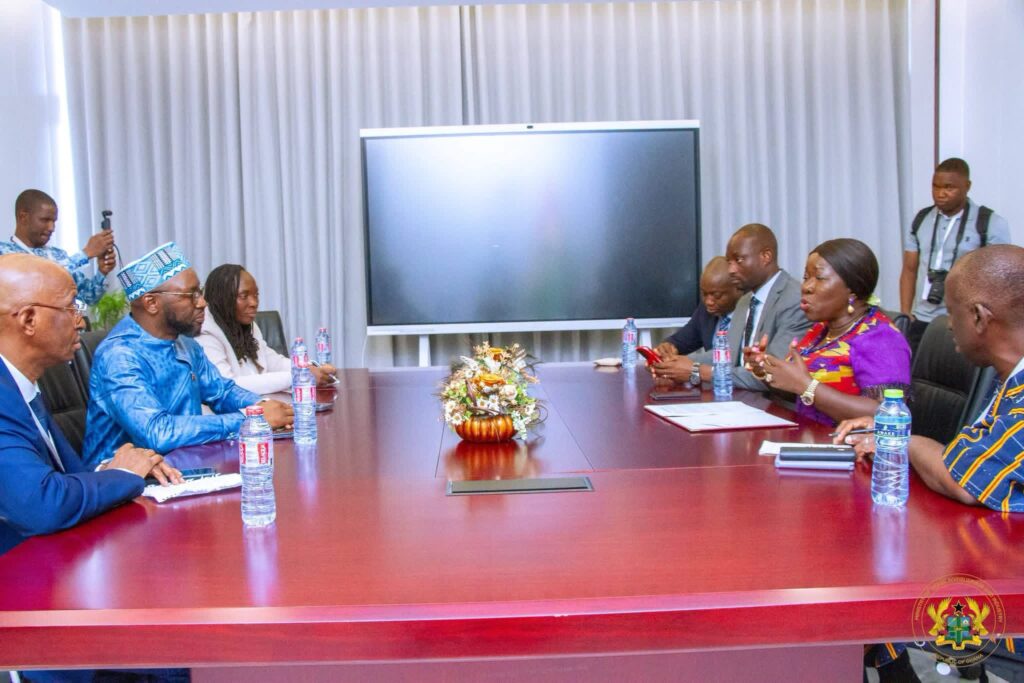
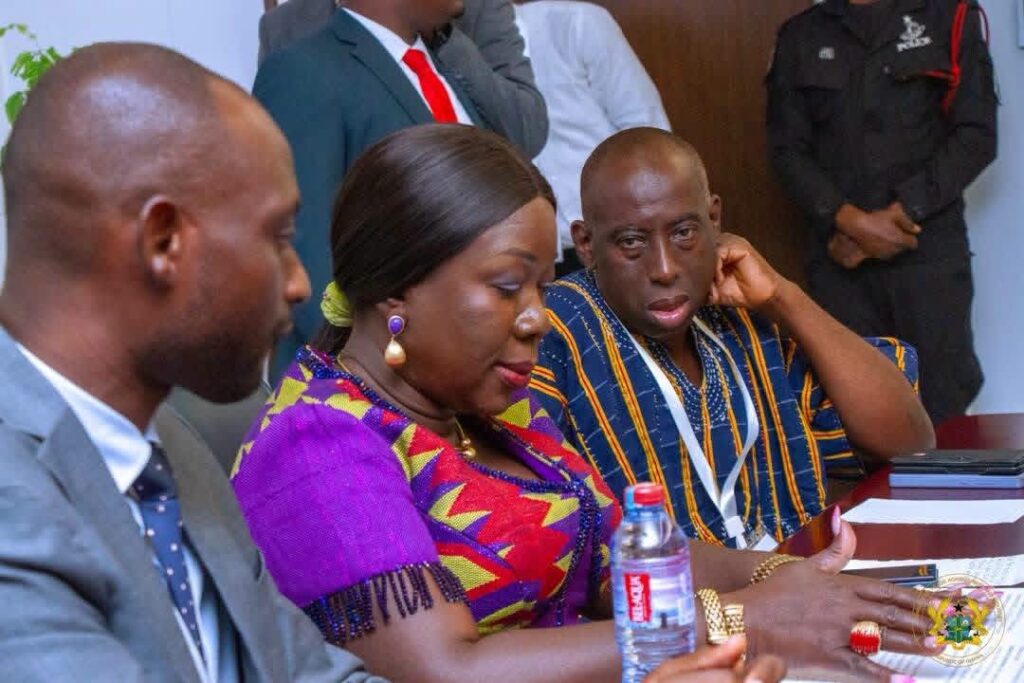
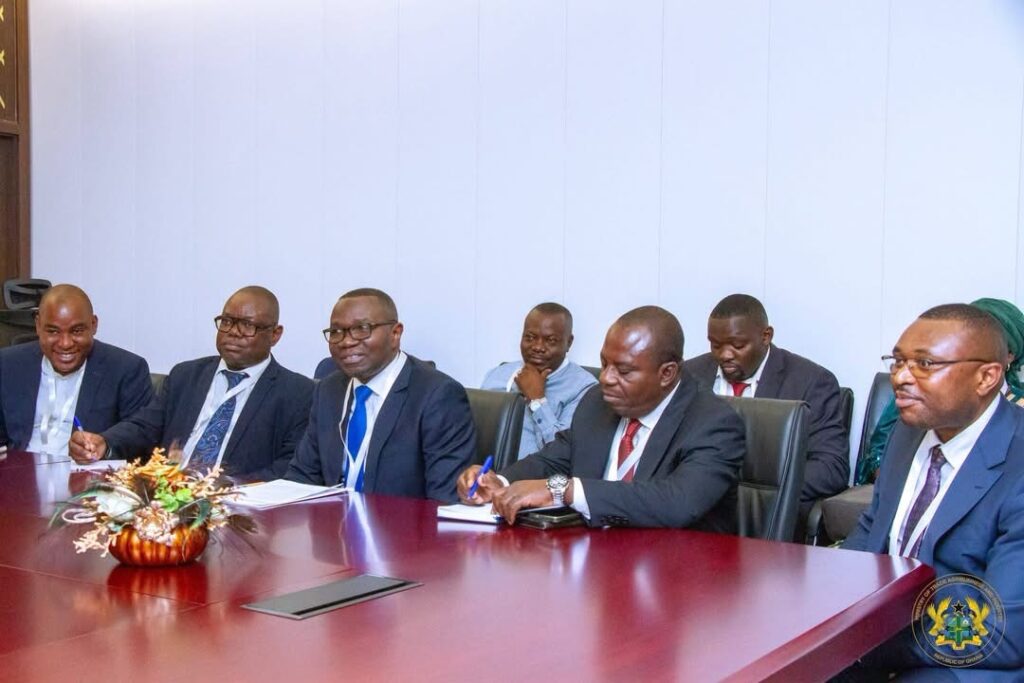
The commitment emerged during a bilateral meeting between Ghana’s Minister for Trade, Agribusiness and Industry, Hon. Elizabeth Ofosu-Adjare, and her Congolese counterpart, Hon. Julien Paluku Kahongya, in Accra.
The meeting identified the proposed establishment of a Joint Chamber of Commerce in Kinshasa, harmonisation of standards, development of free economic zones and cooperation under the AfCFTA as key areas for collaboration.
The discussions also covered the DRC’s bid to host an international arbitration centre, with Ghana being asked to support the Congolese proposal.
‘’Ghana and the Democratic Republic of Congo are exploring stronger trade and industrial partnerships through institutional cooperation, investment promotion and continental trade integration.’’
Minister for Trade, Hon. Elizabeth Ofosu-Adjare
Joint Chamber to Strengthen Business Links
The proposed establishment of a Joint Chamber of Commerce in Kinshasa represents an important opportunity to create a structured platform for businesses in both countries to identify commercial partners, exchange market information and develop investment projects.
A functioning chamber could help Ghanaian exporters understand the Congolese market while enabling businesses in the DRC to identify suppliers, manufacturers and investors in Ghana.
It could also provide a channel for addressing commercial concerns and connecting private-sector operators with relevant government institutions.
For Ghana, stronger commercial engagement with the DRC could support efforts to diversify export destinations and expand opportunities for domestic manufacturers and agribusinesses.
For the DRC, cooperation with Ghana could create additional avenues for sourcing products, developing industrial partnerships and strengthening access to West African markets.
However, the chamber’s effectiveness would depend on its institutional structure, membership, funding and ability to connect businesses with actual commercial opportunities.
Regular business meetings, trade missions and investment forums could help translate the proposal into measurable economic outcomes.
The discussions also highlighted the importance of reducing barriers that can discourage businesses from entering new markets.
The differences in product requirements, certification procedures and regulatory processes can increase the cost of exporting, particularly for small and medium-sized enterprises.
A Joint Chamber of Commerce could provide a practical link between businesses in Ghana and the DRC, helping them identify partners, navigate market requirements and develop cross-border investment opportunities.
Standards, Free Zones and AfCFTA
The harmonisation of standards was another major issue discussed by the two ministers, reflecting the importance of regulatory cooperation in expanding intra-African trade.
When countries align or mutually recognise appropriate product standards and conformity-assessment procedures, businesses can face fewer obstacles in getting goods approved for sale in partner markets.
Such arrangements can reduce duplication, improve predictability and support consumer confidence, provided that safety and quality requirements are maintained.
Ghanaian producers, improved regulatory cooperation could strengthen access to markets for manufactured goods and processed agricultural products. Congolese businesses could similarly benefit from clearer requirements when exporting to Ghana.
‘’The proposed development of free economic zones also presents opportunities for cooperation in manufacturing, processing, logistics and export-oriented production.’’
Minister for Trade, Hon. Elizabeth Ofosu-Adjare
Depending on their design, these zones can provide infrastructure and investment incentives intended to attract businesses, encourage industrial activity and support employment.
The discussions align with the broader objectives of the African Continental Free Trade Area, which seeks to establish a single African market for goods and services, promote investment and support the development of regional value chains.
The AfCFTA provides a framework for Ghana and the DRC to explore commercial opportunities across their respective economies.
Nevertheless, businesses will require practical information about market demand, applicable tariffs, customs procedures and product requirements to take advantage of the agreement.
Harmonised standards, effective free economic zones and AfCFTA implementation could help lower trade barriers, attract productive investment and strengthen connections between Ghanaian and Congolese businesses.
DRC Seeks Ghana’s Arbitration Support
Beyond trade and industrial development, the meeting addressed the DRC’s interest in hosting an international arbitration centre, with Hon. Julien Paluku Kahongya, the representative of DRC, appealing for Ghana’s support following bids involving Egypt, Ghana, the DRC and Morocco.
‘’International arbitration provides a mechanism for resolving commercial disputes outside ordinary court proceedings, subject to the applicable legal framework and the parties’ agreements.’’
DRC Representative,Hon. Julien Paluku Kahongya
A credible arbitration centre can strengthen a country’s attractiveness as a location for international business by providing access to specialised dispute-resolution services.
Its effectiveness depends on judicial support, the enforceability of arbitral awards, professional expertise, institutional independence and confidence among investors.
The appeal for Ghana’s backing introduces a diplomatic dimension to the wider economic discussions.
However, the outcome of the competing bids and the position Ghana will ultimately adopt were not specified in the information provided about the meeting.
The next step for both countries will be to translate the areas discussed into practical arrangements, including clear institutional responsibilities, implementation timelines and measurable targets.
The progress could be assessed through business-to-business partnerships, investment commitments, trade growth and the removal of identified regulatory barriers.
READ ALSO:Black Sherif Announces Canadian Dates for ‘Sun Swagga’ Tour-