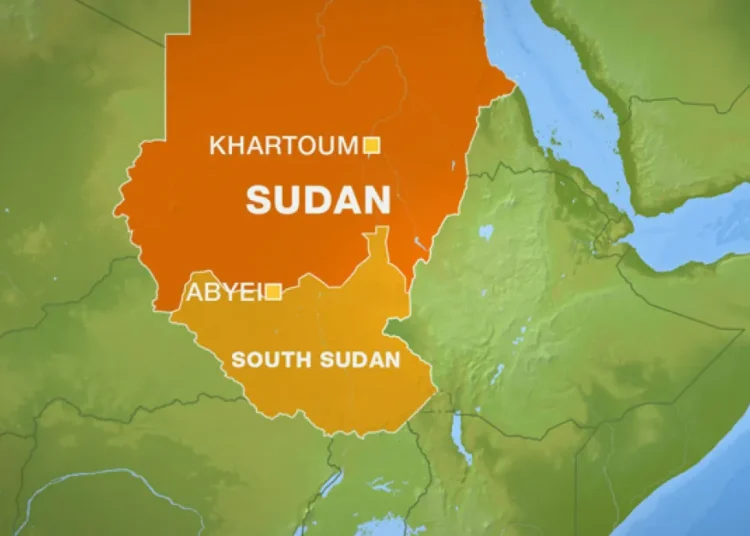
United States, United Kingdom, France, Germany and dozens of other countries have warned of an alarming deterioration in Sudan’s food security, calling for urgent humanitarian access and increased international funding to avert a potential famine in the war-torn country.
In a joint statement released by the US State Department, the countries warned that millions of people were facing acute food insecurity as the conflict between Sudan’s army and the paramilitary Rapid Support Forces (RSF) continued to disrupt food production, displace communities and obstruct humanitarian operations.
“Sudan is experiencing an alarming deterioration in its food security. The risk of famine in the coming months, as warned by the Integrated Food Security Phase Classification, needs urgent action.
“Without immediate action to reverse the current trajectory, the number of children suffering from severe acute malnutrition could exceed the projected 825,000.”
Joint Statement on Famine in Sudan
Millions Face Acute Hunger as Conflict and Drought Deepen Crisis
The joint statement estimated that 19.5 million people, representing 41 per cent of Sudan’s population, were experiencing high levels of acute food insecurity, including five million facing emergency levels of food insecurity.
It warned that the number of areas experiencing food insecurity, initially assessed at 14, was expected to double if urgent measures were not taken to reverse the worsening situation.
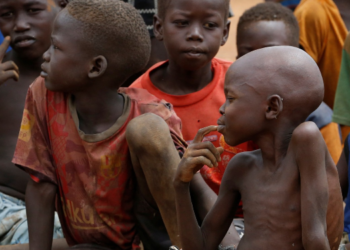
The countries also raised concerns about the growing threat of severe acute malnutrition among children, warning that the number of affected children could exceed the projected 825,000 without immediate intervention.
The crisis has been driven primarily by the war between Sudan’s armed forces and the RSF, which erupted in April 2023 following disagreements over the integration of the two forces under a planned transition to civilian rule.
According to the joint statement, the conflict has displaced millions, damaged critical infrastructure and disrupted healthcare provision, agricultural production, supply chains and markets, weakening communities’ ability to obtain food and other essential supplies.
The humanitarian emergency has also been compounded by restrictions on aid operations and worsening climatic conditions associated with El Niño, which have reduced rainfall and intensified drought across more than half of Sudan.
Farmers have struggled to harvest crops since the conflict began, while the recent drought has placed additional pressure on agricultural production and food availability.
The countries warned that the combined effects of conflict, disrupted food systems and inadequate humanitarian access were increasing the likelihood of famine, requiring immediate intervention to protect vulnerable populations.
Countries Demand Unrestricted Aid Access and Protection for Humanitarian Workers
Also, the signatories placed primary responsibility for alleviating the suffering of Sudanese civilians on the parties to the conflict, urging them to remove obstacles preventing humanitarian organisations from delivering life-saving assistance.
They called for humanitarian operations to be authorised through all cross-line and cross-border routes, including air access into Darfur, to facilitate the rapid deployment of aid and timely medical evacuations for humanitarian workers.
The statement also urged the warring parties to maintain the presence and protection of humanitarian personnel throughout Sudan.
Specific measures proposed included reducing delays in visa and customs clearance, extending the validity of visas and travel permits, and removing additional permit requirements, taxes and other bureaucratic restrictions slowing aid deliveries.
The countries further called on the parties to refrain from attacks on civilian infrastructure, particularly agricultural facilities and food systems essential to sustaining livelihoods and delivering basic services.
They also urged stronger civil-military coordination to improve the safety of humanitarian workers and protect humanitarian sites.
International Community Urged to Increase Funding and Prevent Famine
Moreover, the nations urged the international community to boost funding in response to Sudan’s growing needs, ensure aid reaches the most vulnerable, and demand access for humanitarian agencies.
They also encouraged development and financial institutions to adjust their ongoing programmes to reflect the deteriorating food security situation, directing support towards the areas facing the greatest need.
“We stand with the people of Sudan and humanitarian organisations who are working tirelessly and under extremely challenging conditions to provide life-saving assistance.”
Joint Statement on Famine in Sudan
United States, Australia, United Kingdom, France, Germany, and the European Commissioner for Equality, Preparedness and Crisis Management signed the appeal, among others.
The signatories warned that continued restrictions on humanitarian operations could undermine efforts to contain the crisis and prevent famine, particularly as food insecurity spreads and the effects of drought intensify.
READ ALSO: Harry Kane Beats Yamal, Mbappé to 2026 Ballon d’Or